Quick Answer
The main kinds of school girls’ short sleeve shirt are short-sleeve polo shirts, Oxford button-down shirts, Peter Pan collar blouses, and other round- or pointed-collar uniform blouses. The best choice depends on the school dress code, climate, fabric requirements, age group, and whether the shirt is intended for everyday wear or formal uniform occasions.
Current school uniform policies show that short-sleeved polo shirts and Oxford-style shirts are particularly common, while Peter Pan and round-collar blouses remain popular for younger students. Published uniform guides from schools in different regions, for example, specify short-sleeved polo shirts, short-sleeved Oxford shirts, and Peter Pan collar options, confirming that there is no single universal design for girls’ school shirts.
What Kinds of School Girls’ Short Sleeve Shirts Are Available?
A school girls’ short sleeve shirt is not simply a smaller version of an ordinary women’s blouse. When it comes to schoolwear, garments have to meet several practical requirements: they need to be consistent with the school’s uniform policy, remain comfortable during long periods of sitting and movement, withstand frequent washing, and retain a neat appearance after repeated use. For this reason, school uniform suppliers tend to offer a range of standard shirt designs rather than a single universal style. Depending on the school and country, these may include polo shirts, Oxford shirts, Peter Pan collar blouses, pointed-collar button shirts and lightweight performance shirts. Published school uniform policies clearly demonstrate this variation; some schools specify short-sleeved polo shirts for warmer weather, while others allow or require short-sleeved Oxford shirts or Peter Pan-collar blouses.
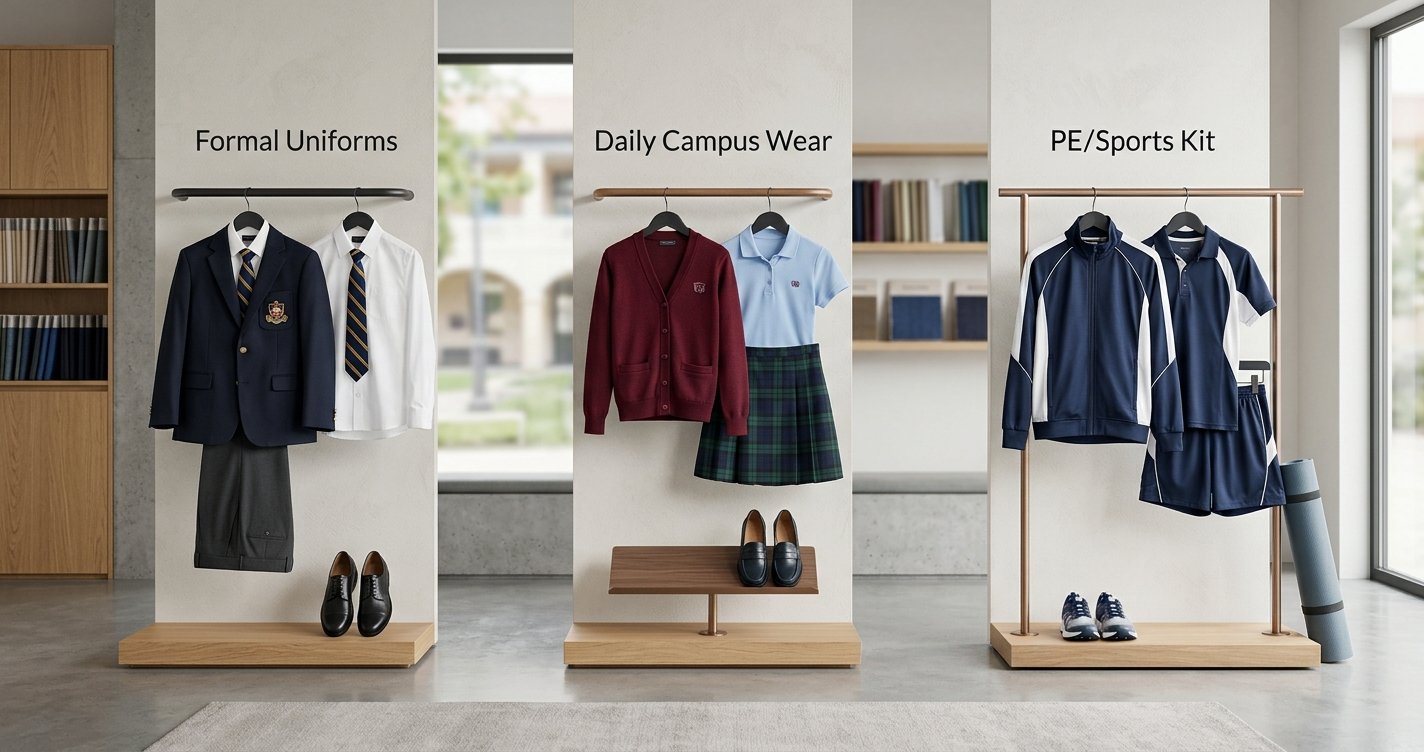
The most important thing to understand is that the school’s specifications should always take priority over appearance. A shirt that looks suitable in a catalogue may still be unacceptable if its collar, colour, fabric, logo, sleeve construction or fit does not comply with the school’s uniform rules. For instance, one school guide currently permits a white short-sleeved polo shirt for the spring uniform, while another specifies a white or light blue Oxford button-down blouse as an alternative. Some schools also distinguish between formal and daily uniforms, meaning the same student may require different shirt styles at different times during the academic year.

Short Sleeve Polo Shirt
The short-sleeved polo shirt is probably the most practical option for everyday schoolwear, combining a relaxed knitted body with a recognisable collar and short button placket. Compared with a traditional woven blouse, a polo shirt is generally easier to move in, making it better suited to active school days, warm climates, outdoor activities and younger students. Current school uniform catalogues commonly feature polo shirts made from pique, interlock or performance fabrics, with both girls’-specific and co-ed fits available.
The fabric selected makes a noticeable difference. Pique provides a textured surface and a traditional polo appearance, while interlock feels smoother and softer against the skin. Performance versions may use synthetic fibres or blends designed to improve moisture management, drying speed, dimensional stability, and resistance to repeated laundering. Next’s current schoolwear guide describes polo shirts as having a soft collar and short button placket, and as being soft and flexible, while St. Thomas Aquinas High School lists both standard and performance short-sleeved polos as part of its girls’ daily uniform options.
The polo shirt is also attractive to manufacturers and uniform buyers because its construction can be standardised across a broad size range. A school can specify the same base garment for all grades, changing only the size, colour, embroidery or fit. Some uniform programmes require a school crest or embroidered logo, whereas others explicitly allow plain versions. The United School, for instance, includes both logo-bearing and plain short-sleeved polo shirt options in its uniform guide, demonstrating how schools can distinguish the garment specification from the branding requirement.
Short Sleeve Oxford Shirt
The short-sleeved Oxford shirt is a more structured alternative to the polo shirt. Made from woven fabric with a button-through front and conventional collar, it creates a cleaner, more formal appearance that works particularly well with pleated skirts, tailored trousers, blazers, ties and other traditional uniform items.
Oxford shirts are widely used in girls’ school uniforms because they strike a balance between a formal appearance and practical construction. Current schoolwear sources describe Oxford shirts as somewhat thicker, textured cotton shirts that maintain a smart appearance. Uniform suppliers offer girls’ short-sleeved Oxford blouses with button-down collars and chest pockets.
Fabric composition can vary considerably. A school shirt may be made from 100% cotton to give it a natural feel, but cotton-polyester blends are also common as polyester contributes to durability, dimensional stability, wrinkle resistance, and ease of care. One currently listed girls’ short-sleeved Oxford uniform blouse, for example, is made from a 60% cotton/40% polyester fabric.
The choice between an Oxford shirt and a polo shirt therefore often reflects the desired level of formality of the school. Polo shirts tend to communicate a more relaxed, active uniform style, whereas Oxford blouses are better suited to schools that want a traditional shirt silhouette. Some schools allow both options, providing families with a practical everyday choice while retaining the formal shirt as part of the uniform.
Peter Pan Collar Short Sleeve Blouse
The Peter Pan collar short-sleeved blouse is an important style of short-sleeved shirt for schoolgirls, particularly for younger pupils and traditional uniforms. The rounded collar is its defining feature, creating a softer appearance than the pointed collar normally associated with an Oxford shirt.
This style is particularly common in primary school uniforms as it provides a neat, classic silhouette without appearing overly formal. Oxford School’s uniform policy, for example, lists a white short-sleeved blouse with a Peter Pan collar as an option for younger girls in the formal uniform category. Another school uniform specification currently permits a Peter Pan-collared top alongside polo and Oxford options.
From a garment development perspective, careful attention must be given to the pattern construction of the collar. It needs enough structure to maintain its rounded shape after repeated washing, while ensuring the neckline and shoulder area remain comfortable during daily movement. The selection of interfacing, seam allowance, collar point shaping, and topstitching can all influence whether the finished garment continues to look neat after months of use.
Peter Pan blouses can also be manufactured from different weight fabrics depending on climate and school requirements. Possible choices include lightweight cotton, cotton-polyester broadcloth, poplin, and easy-care blends, but the correct specification should be based on the school’s desired appearance and expected laundering conditions rather than choosing a fabric solely because it feels soft in the showroom.
Pointed-Collar and Button-Down Short Sleeve Shirts
A shirt with a pointed collar or button-down short sleeves offers a more conventional formal appearance. The collar can be worn with or without a tie, under a jumper or blazer, or on its own with a skirt or trousers. This makes the design useful for schools with a traditional uniform policy.
While the visual difference between a standard pointed collar and a button-down collar is relatively small, it can be important in terms of practical use. The collar points of a button-down collar are secured to the shirt with small buttons, helping the collar stay in place during movement. Current girls’ uniform products include short-sleeved Oxford shirts with button-down collars, and some schools explicitly specify Oxford button-down shirts as part of their approved uniform.
The fit should be comfortable rather than excessively close to the body. As school shirts are worn while students sit, stand, write, carry bags, participate in activities and move between classrooms, the design needs to allow sufficient ease of movement through the chest, armhole and back. A well-designed girls’ school shirt should look neat when tucked in, without restricting ordinary movement.
Current commercial schoolwear products demonstrate the variety of designs available. Some short-sleeved girls’ shirts have a slightly fitted body, while school policies may simply require the shirt to be tucked in and to meet modesty or uniform requirements. It is important for buyers to distinguish between a “girls’ fit” and a “tight fit”: a shaped pattern can improve the appearance of a shirt without restricting the ease of movement required for everyday schoolwear.
Performance and Easy-Care Short Sleeve Shirts
A new trend in schoolwear is the performance short-sleeved shirt, which is particularly popular with schools in hot or humid climates. Rather than focusing solely on traditional cotton shirting, manufacturers can use blended or engineered fabrics that are designed to enhance moisture movement, drying speed, wrinkle recovery, and durability.
This category is becoming increasingly relevant because school shirts may need to be washed several times each week during warm weather. Fabrics that look excellent when new but wrinkle heavily, shrink noticeably, or lose their shape after repeated washing can create a higher total cost for parents and schools. Therefore, easy-care construction is not merely a marketing feature; it can directly influence the lifespan and maintenance requirements of a garment.
Performance does not necessarily mean a sporty appearance. A performance school shirt can retain the visual characteristics of a conventional uniform shirt while incorporating a more functional fabric. St Thomas Aquinas High School, for instance, offers its pupils the choice of a standard polo shirt or a short-sleeved performance polo shirt as part of their daily uniform.
For bulk uniform programmes, this category can be particularly attractive when durability and maintenance costs are a consideration. However, the fabric must still meet the school’s expectations regarding colourfastness, opacity, resistance to pilling, dimensional stability, texture and overall appearance. A technically advanced fabric is not necessarily better if it feels uncomfortable or does not match the school’s established uniform image.

Comparison of the Main School Girls’ Short Sleeve Shirt Types
The following table provides a practical way to compare the main categories without assuming that one style is universally superior.
| Shirt Type | Typical Fabric | Appearance | Comfort | Formality | Best Use | Main Advantage |
| Short Sleeve Polo | Piqué, interlock, performance knit | Casual and neat | High | Medium | Daily schoolwear, warm weather | Flexible and easy to move in |
| Short Sleeve Oxford | Cotton, cotton-polyester, poplin | Structured and traditional | Medium to high | High | Formal daily uniform | Smart appearance and durability |
| Peter Pan Blouse | Broadcloth, poplin, cotton blend | Soft and traditional | High | Medium to high | Primary school | Comfortable rounded collar |
| Pointed-Collar Shirt | Woven cotton or blend | Classic shirt style | Medium | High | Formal uniform | Works well with ties and blazers |
| Button-Down Oxford | Oxford or blended shirting | Structured | Medium | High | Traditional school uniform | Collar stays in position |
| Performance Polo | Technical knit or blend | Modern and sporty | High | Medium | Hot climates and active schools | Moisture and easy-care performance |
The right choice depends on the relationship between uniform policy, climate, student age, fabric performance, washing frequency, and required formality. For example, a short-sleeve polo may be ideal for a school with an active, casual uniform policy, while a button-down Oxford is more appropriate for a school where students wear ties and blazers.
How to Choose the Right School Girls’ Short Sleeve Shirt?
When choosing a short-sleeved shirt for girls at school, compliance with the uniform guidelines should take precedence over style. Check the official uniform guide for your school to find out which colours, collars, logos, fabrics, sleeve lengths, and shirt constructions are permitted. This is important because uniform policies can be very specific: some schools allow several shirt styles, while others require one specific garment or restrict when certain shirts can be worn.
The second consideration is fabric performance. In warm environments, breathable, moisture-wicking fabrics can make a significant difference over the course of a full school day. For schools where shirts are frequently washed, cotton-polyester blends or easy-care fabrics may offer a useful compromise between comfort and maintenance. For formal uniforms, woven Oxford or poplin fabrics are often preferred as they maintain the crisp appearance expected of traditional schoolwear.
The third consideration is fit and movement. Children and teenagers are not still throughout the school day, so shirts should allow movement around the shoulders and upper back without becoming excessively loose. The sleeve opening should also provide adequate room for movement of the arms while avoiding excessive volume. For girls’ uniforms in particular, it is important to use a properly graded pattern because body proportions change significantly across age groups.
Finally, consider long-term cost rather than purchase price alone. A slightly more expensive shirt that can withstand repeated washing, maintain its colour, resist pilling and remain presentable for a longer period may be more economical than a low-cost garment that needs frequent replacement. School uniform programmes are often purchased in multiples, so fabric durability, seam construction, colourfastness and care requirements can substantially impact total ownership cost.
What Fabric Is Best for a School Girls’ Short Sleeve Shirt?
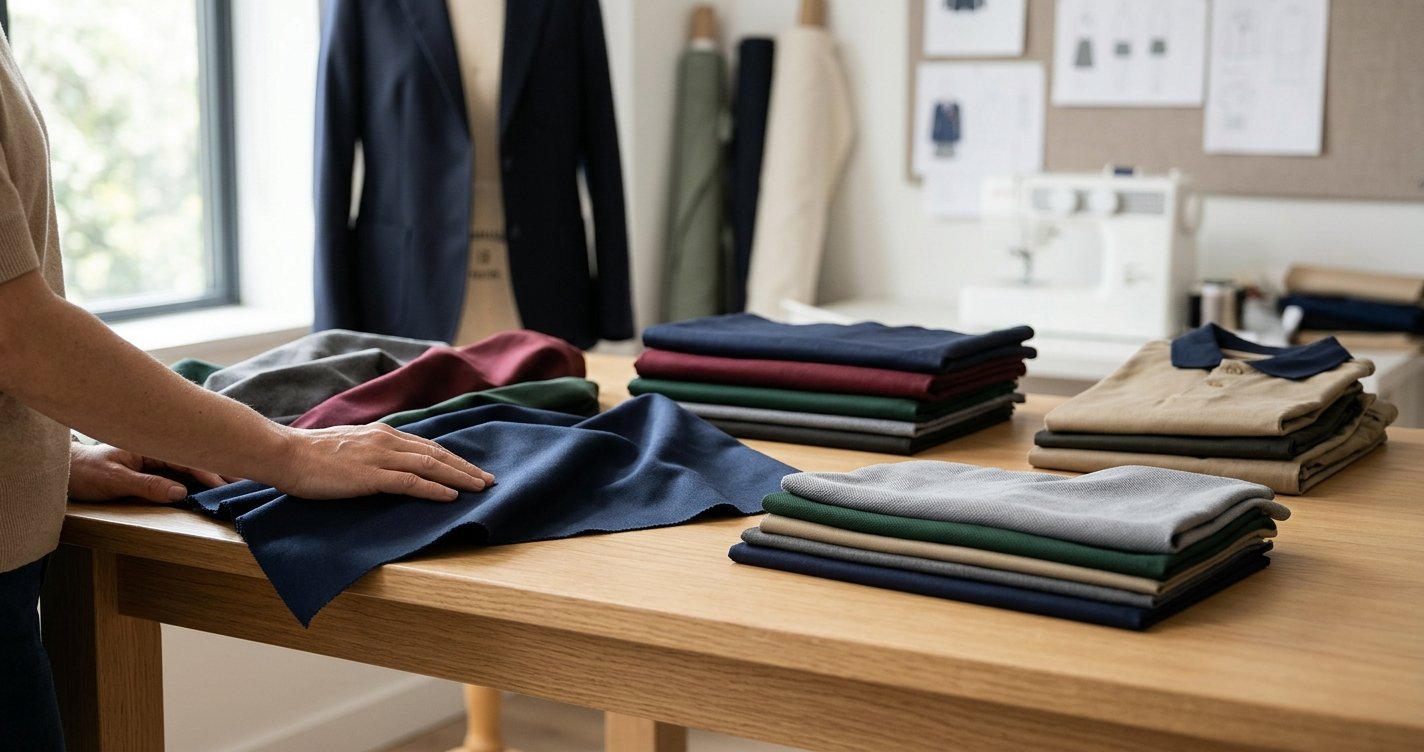
While there is no single best fabric for every school, several options are particularly practical. Cotton feels natural and is comfortable, while cotton-polyester blends can improve durability, wrinkle resistance, drying performance, and dimensional stability. Knitted polyester or blended performance fabrics are appropriate for polo shirts where moisture management and ease of care are priorities.
Woven cotton or cotton-rich blends remain common for formal Oxford shirts because they provide the structured appearance associated with traditional school uniforms. Pique and interlock are widely used for everyday polos because their knitted construction provides greater stretch and comfort than many woven shirt fabrics. Current schoolwear ranges specifically feature interlock, pique and performance fabrics in short-sleeved polo shirt options.
When selecting fabrics, manufacturers should also consider GSM, shrinkage, colourfastness, pilling, abrasion resistance, seam performance, opacity and washing temperature. These technical properties can be more important than fibre composition alone. For example, a well-engineered polyester-cotton blend may outperform a poorly specified 100% cotton fabric in a school uniform that is frequently washed.

FAQ: School Girls’ Short Sleeve Shirt
- What is the most common school girls’ short-sleeve shirt?
Short-sleeve polo shirts and short-sleeve Oxford or blouse styles are among the most common options. The exact choice depends on the school’s uniform policy and regional schoolwear tradition.
- Are girls’ school shirts usually cotton?
Many school shirts use cotton or cotton-rich fabrics, but cotton-polyester blends and performance fabrics are also widely used. The blend can improve wrinkle resistance, durability, and ease of care.
- Is a polo shirt suitable for school girls?
Yes, provided the school permits polo shirts. Short-sleeve polos are particularly practical for everyday wear and warm weather because knitted fabrics generally allow comfortable movement.
- What is the difference between an Oxford shirt and a polo shirt?
An Oxford shirt is a structured woven shirt with a traditional button-through construction, while a polo is normally a knitted shirt with a soft collar and shorter button placket. Oxford shirts generally look more formal, whereas polos offer greater casual comfort.
- What collar is best for a girls’ school uniform?
There is no universally best collar because schools may require a Peter Pan, pointed, button-down, Revere, or another specific design. The correct choice should always follow the school’s uniform specification.
- How should a school girls’ short sleeve shirt fit?
It should be neat without being excessively tight, with enough room through the chest, shoulders, and armholes for normal school activities. The correct fit also depends on whether the school requires the shirt to be tucked in.
Conclusion
The market for short-sleeved shirts for schoolgirls is broader than it may initially appear. The main categories include polo shirts, Oxford shirts, Peter Pan collar blouses, pointed collar shirts, button-down shirts, and performance-oriented shirts for school, each offering a different combination of comfort, formality, durability, and suitability for different climates.
For everyday warm-weather schoolwear, a short-sleeved polo shirt is often the most versatile choice. For a more traditional academic look, a short-sleeved Oxford or button-down shirt is usually more appropriate, while a Peter Pan collar can create a softer silhouette for younger students. Performance fabrics are becoming increasingly popular in schools that prioritise easy maintenance and comfort in warm climates. Published uniform policies confirm that schools commonly use a combination of these styles rather than following one universal model.
The most important lesson for B2B buyers, uniform distributors and manufacturers is that a successful short-sleeved girls’ school shirt should be evaluated as a complete garment system rather than by appearance alone. Factors such as collar construction, fabric composition, GSM, dimensional stability, colourfastness, fit grading, stitching quality, wash durability, and compliance with the school’s exact uniform specifications all contribute to the final product. A shirt that looks smart initially but loses its shape after repeated washing is not a good schoolwear product; a better garment is one that remains comfortable, consistent and presentable throughout the school year.