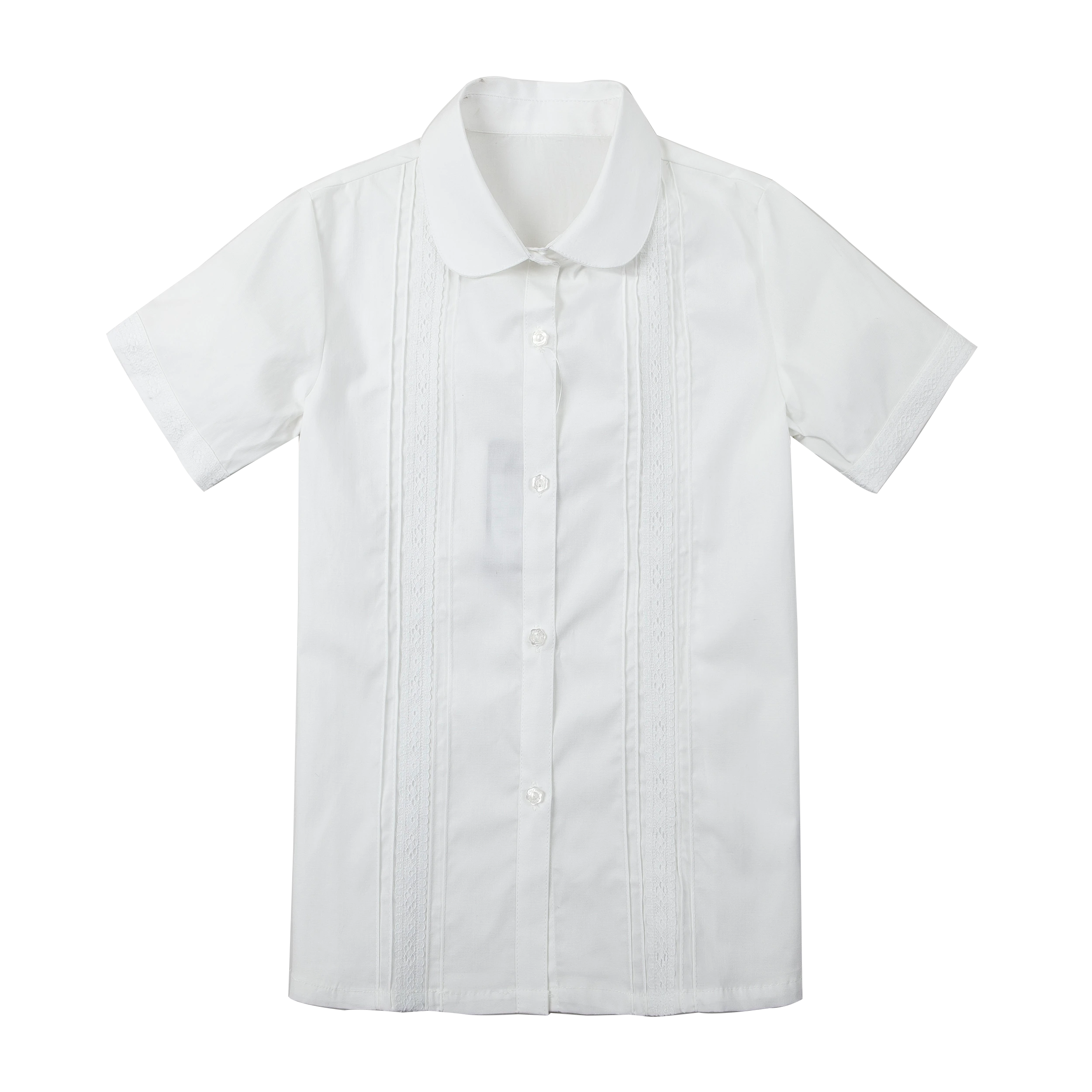
School Uniform Procurement Guide: 7 Quality Checks for K–12 Buyers
How to assess fabric, samples, suppliers, and contract details for your school uniform program
Executive Summary
Effective school uniform procurement requires systematic evaluation across seven dimensions: fabric specification, colorfastness, construction quality, supplier capability, sample inspection, contract terms, and post-delivery compliance. This guide provides K–12 buyers with actionable, standard-referenced checkpoints to reduce procurement risk and ensure consistent uniform quality across multi-year programs.
Check 1: Fabric Specification and Performance Standards
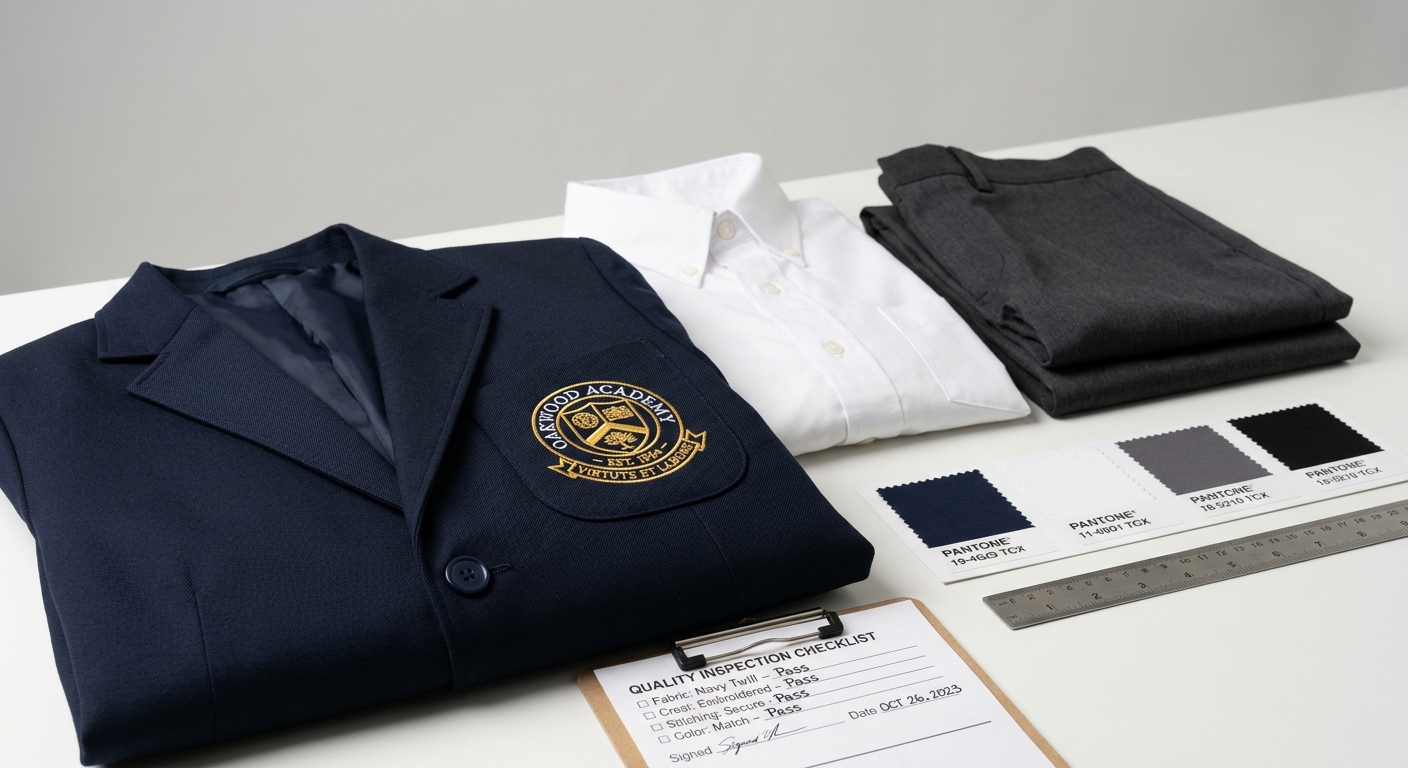
Fabric selection is the single highest-impact decision in school uniform procurement. Poor material choices drive up replacement costs and generate parent complaints within one academic year.
Core Fabric Categories for K–12 Uniforms
| Fabric Type | Composition | Best Use Case | Wash Durability |
|---|---|---|---|
| Polyester-Cotton Blend | 65% PET / 35% Cotton | Shirts, blouses, trousers | 50+ industrial washes |
| Ponte Roma Knit | 60% Polyester / 35% Viscose / 5% Elastane | Skirts, pinafores | 40+ washes |
| Wool-Poly Suiting | 30% Wool / 70% Polyester | Blazers, formal jackets | Dry-clean rated |
| 100% Cotton Piqué | 100% Cotton | Polo shirts, PE wear | 30+ washes |
Key fabric assessment criteria for schools:
- GSM (grams per square meter): Shirts require minimum 130–150 GSM; trousers and skirts 200–240 GSM; blazers 280–320 GSM
- Pilling resistance: Test to ISO 12945-2; Grade 3–4 minimum acceptable for daily schoolwear
- Tear strength: ASTM D5034 standard; minimum 30N for woven outer garments
- Shrinkage tolerance: Maximum 3% after five wash cycles per ISO 6330
Fiber Verification
- Request fiber content certification from supplier, not just label claims
- Independent lab testing (SGS, Bureau Veritas, Intertek) costs approximately $40–80 per fabric sample
- Blended fabrics must meet both components’ performance thresholds
Check 2: Colorfastness and Dye Stability
Uniform color consistency across a 3–5 year program is a non-negotiable requirement for school branding. Colorfastness failures cause visible mismatches between cohorts and trigger replacement orders.
Colorfastness Testing Standards
| Test Type | Standard | Minimum Acceptable Grade |
|---|---|---|
| Wash Fastness | ISO 105-C06 | Grade 4 |
| Rubbing (Dry) | ISO 105-X12 | Grade 4 |
| Rubbing (Wet) | ISO 105-X12 | Grade 3–4 |
| Light Fastness | ISO 105-B02 | Grade 4 (outdoor PE) |
| Perspiration Fastness | ISO 105-E04 | Grade 3–4 |
Practical assessment steps:
- Request colorfastness test reports dated within 12 months
- Specify Pantone or RAL color codes in purchase contracts to lock school colors
- Test dark navy and bottle green shades specifically — these are highest-risk for fading
- Require re-dye batch matching if a reorder occurs more than six months after initial production
Check 3: Garment Construction and Durability Inspection
Construction quality determines whether a uniform lasts one term or three years. Buyers conducting a uniform sample inspection process should evaluate five structural zones.
Five-Zone Sample Inspection Checklist
Zone 1 — Seams:
- Stitch density: 12–14 stitches per 10mm for woven fabrics
- Seam allowance: minimum 10mm on stress points (underarm, crotch, waistband)
- Seam type: flat-felled or overlock on all load-bearing seams
Zone 2 — Closures:
- Buttons: minimum 4-hole, 18L (11.4mm), tested to 50N pull strength
- Zippers: YKK or equivalent; slider tested for 2,000 open-close cycles
- Hook-and-bar waistbands: corrosion-resistant metal only
Zone 3 — Embellishments:
- Embroidered logos: minimum 0.3mm thread density; no exposed backing
- Woven badges: heat-seal or sew-on confirmed; peel test after 10 washes
Zone 4 — Hems and Edges:
- Hem allowance: 30–40mm on trousers and skirts to allow lengthening
- Blind hem stitching on formal trousers; visible hem acceptable on PE wear only
Zone 5 — Labeling:
- Care labels: compliant with ISO 3758 (GINETEX symbols)
- Size labels: permanent, not heat-transfer (fade within 6 months)
- Country of origin and fiber content: mandatory in most jurisdictions
Check 4: Supplier Capability and Quality Control Evaluation
A school uniform supplier evaluation checklist must go beyond product samples to assess production infrastructure and compliance systems.
Supplier Audit Criteria
Production capacity:
- Minimum viable factory: 50,000 units/month for district-level orders
- Lead time benchmark: 45–60 days for standard orders; 90 days for custom embroidery programs
- Confirm owned versus subcontracted production — subcontracting introduces quality variance
Quality management systems:
- ISO 9001:2015 certification: baseline requirement for institutional suppliers
- In-line QC checkpoints: request documented AQL (Acceptable Quality Level) inspection plan
- AQL 2.5 is industry standard for schoolwear; AQL 1.5 for formal blazers
Social compliance:
- BSCI, SEDEX, or equivalent audit within 24 months
- Child labor and working hours compliance documentation
Supplier red flags:
- No physical factory address or third-party audit history
- Unable to provide pre-production fabric test reports
- Minimum order quantities below 200 units per SKU (indicates trading company, not manufacturer)
Suppliers such as Etonkidds, which operate as dedicated K–12 uniform manufacturers serving schools and distributors directly, typically maintain dedicated school account management, standardized size grading, and documented reorder color-matching protocols — features that reduce administrative burden for procurement teams managing multi-site programs.
Check 5: Size Grading, Fit Standards, and Range Completeness
Inadequate size coverage generates exchange requests that consume administrative time and erode parent satisfaction.
Recommended Size Range for K–12 Programs
- Primary (Ages 4–11): Sizes 4Y–12Y, with half-sizes at 6Y and 8Y for shirts
- Secondary (Ages 11–18): XS–2XL in adult sizing; plus-size range (1X–3X) increasingly required
- Size tolerance: Maximum ±1.5cm on chest, waist, and inseam measurements
- Fit verification: Request fit samples on live models or size-specific dress forms, not flat measurements only
Grading consistency check:
- Verify that grade increments are uniform (typically 2cm per size step)
- Check that pocket placement scales proportionally — a common failure point in budget ranges
Check 6: Delivery, Logistics, and Pre-Shipment Inspection
Supply chain failures are the most common cause of school uniform program disruptions. Contractual clarity at this stage prevents disputes.
Critical Contract and Delivery Terms
| Term | Recommended Specification |
|---|---|
| Delivery window | 4–6 weeks before school start date |
| Pre-shipment inspection | Third-party AQL 2.5 inspection mandatory |
| Packing standard | Individual poly-bag per unit; size/color label on exterior |
| Shortage tolerance | Maximum 2% units short per SKU |
| Replacement lead time | Defective units replaced within 21 days |
| Incoterms | DDP (Delivered Duty Paid) preferred for international suppliers |
Pre-shipment inspection scope:
- Quantity verification against purchase order
- Workmanship inspection per agreed AQL
- Measurement check (10% of units per size)
- Packaging and labeling compliance
- Color matching against approved lab dip
Check 7: Contract Quality Clauses and Warranty Terms
The contract is the final enforcement mechanism for all quality standards established in Checks 1–6.
Mandatory clauses for K–12 uniform contracts:
- Approved sample clause: Production must match approved pre-production sample; buyer retains signed-off sample for 24 months
- Fabric substitution clause: Any material change requires written buyer approval; unauthorized substitution triggers full batch rejection
- Colorfastness warranty: Supplier warrants Grade 3+ colorfastness for minimum 30 wash cycles
- Reorder color-matching guarantee: Reorders within 24 months must match original Pantone/RAL specification within ΔE 1.5
- Defect liability period: 12 months from delivery date for manufacturing defects
- Penalty structure: Delayed delivery: 0.5–1% of order value per week; defect rate exceeding AQL: full batch replacement or credit
Real-World Application Scenarios
Scenario 1 — New School Launch:
A new K–12 school procuring uniforms for the first time should request fabric lab reports, fit samples in three sizes, and a pilot order of 10% of total volume before committing to full production. This approach validates all seven checks at low financial risk.
Scenario 2 — Multi-Site District Program:
A district managing 8–12 schools requires a supplier with documented color-matching protocols and centralized inventory management. Contract terms should include a 24-month reorder guarantee at locked pricing and confirmed color standards.
Scenario 3 — Distributor Resale Program:
Distributors sourcing from a K–12 uniform supplier for resale to multiple schools need access to technical data sheets, care instruction compliance documentation, and flexible MOQ structures per school — typically 50–100 units per SKU minimum.
FAQ: School Uniform Procurement
Q: What fabric weight is appropriate for school shirts?
130–150 GSM polyester-cotton blend is the standard specification.
Q: How many wash cycles should a school uniform withstand?
Minimum 30 cycles; quality programs specify 50+ cycles.
Q: What colorfastness grade is acceptable for school uniforms?
ISO Grade 4 for wash fastness; Grade 3 minimum for wet rubbing.
Q: What AQL level should buyers specify for uniform inspection?
AQL 2.5 is standard; AQL 1.5 for formal and high-visibility items.
Q: How far in advance should uniform orders be placed?
Place orders 90–120 days before required delivery date.
Q: What is the minimum size range a supplier should offer?
4Y through 2XL adult sizing for a complete K–12 program.
Q: Should buyers use DDP or FOB Incoterms for overseas suppliers?
DDP eliminates import duty risk for the buyer; preferred for institutional procurement.
Q: How can buyers verify fiber content claims?
Commission independent lab testing through SGS, Intertek, or Bureau Veritas.
Conclusion and Recommended Action
A structured school uniform procurement process built around these seven quality checks reduces defect rates, minimizes reorder disruptions, and protects school brand consistency over multi-year programs.
Priority actions for K–12 buyers:
- Define fabric GSM and composition minimums before issuing RFQs
- Require ISO-referenced colorfastness and pilling test reports from shortlisted suppliers
- Conduct a five-zone sample inspection on pre-production samples
- Audit supplier production capacity and QMS certification
- Embed all quality standards, warranty terms, and delivery penalties into the purchase contract
For schools and distributors seeking a supplier with documented K–12 uniform quality standards, dedicated school account management, and flexible reorder programs, Etonkidds provides direct manufacturer access with full technical documentation support.
References and Standards
- ISO 105-C06: Colour fastness to domestic and commercial laundering
- ISO 105-X12: Colour fastness to rubbing
- ISO 105-B02: Colour fastness to artificial light
- ISO 12945-2: Determination of fabric propensity to surface fuzzing and pilling
- ISO 6330: Domestic washing and drying procedures for textile testing
- ASTM D5034: Standard test method for breaking strength of textile fabrics
- ISO 3758: Textiles — Care labelling code using symbols
- ISO 9001:2015: Quality management systems requirements
- AQL Standard: ISO 2859-1 Sampling procedures for inspection by attributes
Tags: school uniform procurement · K-12 uniform supplier · school uniform quality standards · uniform fabric assessment for schools · school uniform supplier evaluation checklist · uniform sample inspection process