In school uniform manufacturing, MOQ is often misunderstood.
From the buyer’s side, it can appear as a minimum barrier. From the factory side, however, MOQ is neither a pricing strategy nor a sales restriction. It is a structural requirement that allows large-scale production systems to operate with consistency, efficiency, and predictable outcomes.
As a factory dedicated to long-term K–12 school uniform programs, our MOQ structure reflects how garments are actually produced at an industrial scale—how fabrics are sourced, how cutting lines are scheduled, how sewing teams are stabilized, and how quality is controlled across millions of units every year.
School Uniform Manufacturing Is Not Short-Run Apparel Production
Unlike fashion apparel or seasonal retail collections, school uniforms operate on a fundamentally different timeline.
A uniform program is not designed for one selling season. It is designed to remain consistent across academic years, enrollment cycles, and replacement periods. Sizes must remain stable. Colors must match year after year. Fabric performance must withstand daily wear, repeated washing, and long-term use by children.
From the factory side, this means production is planned as a system, not as isolated orders.
Every uniform style requires:
Fixed fabric specifications and color standards
Stable pattern grading across full-size ranges
Repeatable construction methods
Consistent sewing line allocation
Predictable quality inspection benchmarks
MOQ exists to protect this system.
Why MOQ Exists from a Manufacturing Standpoint
Before production begins, a significant amount of work happens that is independent of order size.
Patterns must be digitized and graded. Fabric consumption must be calculated. Cutting markers must be created and optimized. Automated cutting lines must be programmed. Sewing lines must be scheduled and staffed. Quality checkpoints must be defined.
This preparation cost is largely the same whether the order is 300 pieces or 3,000 pieces.
When order quantities fall below a workable threshold, three problems occur:
Production efficiency drops sharply
Frequent line changeovers reduce output and increase error rates.Fabric utilization becomes unstable
Smaller quantities increase waste and color-lot inconsistency.Quality consistency becomes harder to control
Variations appear between sizes, batches, and replacement orders.
MOQ is the point at which these risks are controlled rather than managed reactively.
Our Manufacturing Infrastructure Is Designed Around Scale
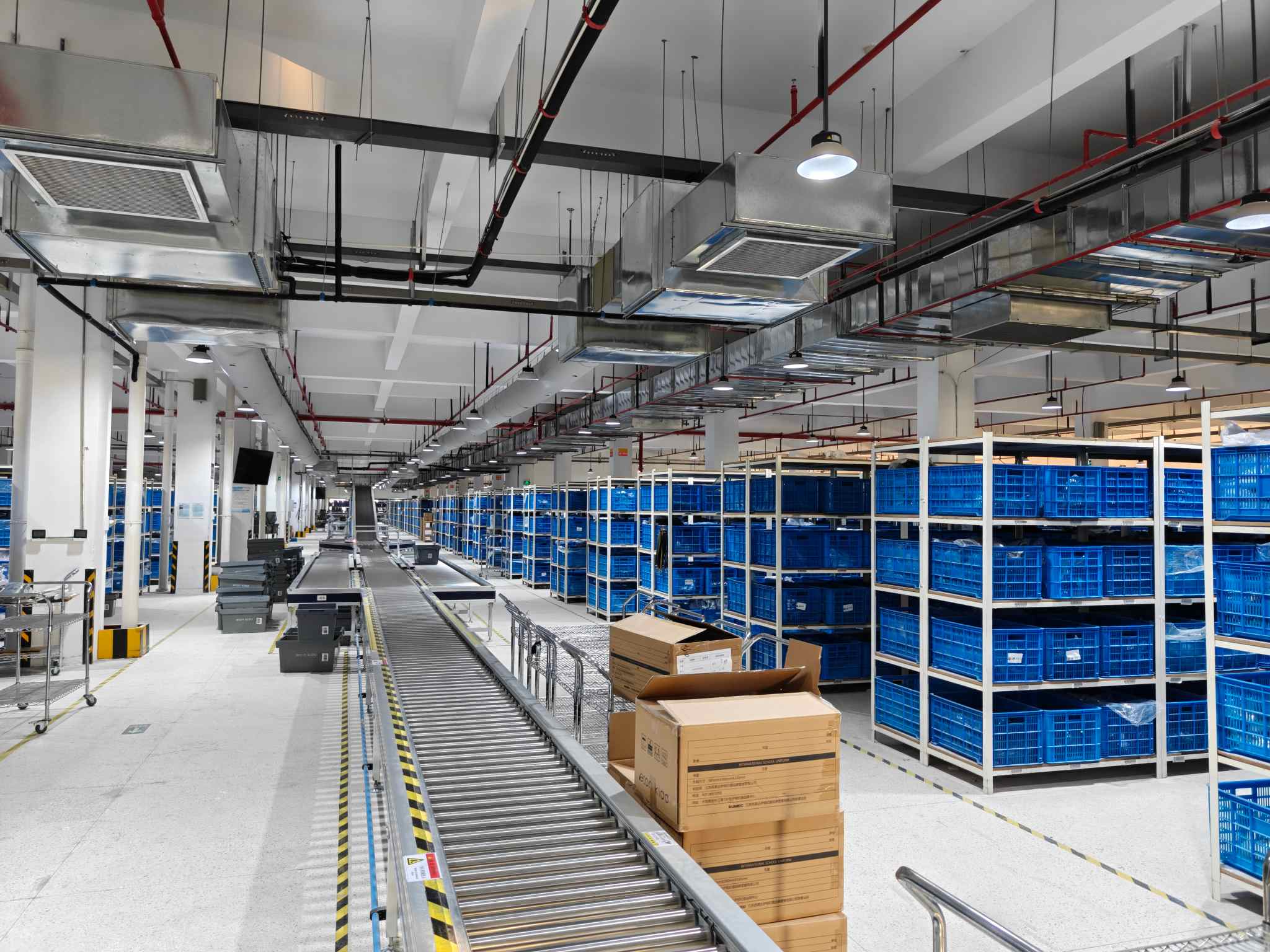
Our factory operates a 60,000-square-foot㎡ modern manufacturing base built specifically for large-volume school uniform production.
We run:
CAD-based pattern systems
Automated Bullmer cutting lines
TPET production flow systems
23 lean sewing lines
ERP-driven production and inventory management
Our annual production capacity exceeds 14 million units, with a stable outbound capability of over 150,000 pieces per day.
This level of scale does not function on ad-hoc production logic. It requires structured planning, and MOQ is one of the key planning tools that allows the system to remain stable.
Two Production Models, Two MOQ Levels
To support different stages of school uniform programs, we operate two clearly defined production models.
Ready-to-Sell (In-Stock Programs)
For partners who require speed, flexibility, or initial market testing, we maintain a broad range of ready-to-sell uniform styles.
These products are based on:
Pre-approved fabrics and trims
Standardized patterns and size sets
Proven construction methods
Existing inventory across fabrics and finished goods
Because the production groundwork is already completed, the MOQ threshold can be lower.
MOQ: 300 pcs per style
Shipment timeline: 7–10 working days after order confirmation
This model is commonly used for:
Fast replenishment during peak enrollment periods
Regional distributors serving multiple schools
Program pilots before full customization
ODM / OEM Customized Production
Customized school uniforms require a different manufacturing approach.
Each style involves:
Dedicated fabric sourcing and dyeing
Custom pattern development
Size grading aligned with school demographics
Specific labeling, trims, and compliance standards
To ensure production stability, the MOQ is set at a level that allows full control over every stage of the process.
MOQ: 1,000 pcs per style
Production lead time: 35–45 days, depending on complexity and volume
This model supports long-term K–12 programs where consistency across academic years is non-negotiable.
MOQ and Fabric Management: The Hidden Constraint
Fabric is one of the most critical—and least visible—factors behind MOQ.
In school uniform manufacturing, fabrics are not generic commodities. They are selected for durability, colorfastness, shrinkage control, and long-term availability.
MOQ allows us to:
Lock fabric dye lots for color consistency
Optimize fabric cutting efficiency
Reduce leftover inventory risk
Maintain repeatable fabric performance across reorder cycles
Without MOQ discipline, fabric variation becomes inevitable, especially in programs that require replacements year after year.
How MOQ Protects Quality Consistency
Quality in school uniforms is cumulative.
Small variations in stitching tension, seam alignment, or fabric behavior may seem minor in isolation, but they become highly visible when thousands of students wear the same garment.
Meeting MOQ thresholds allows us to:
Assign fixed sewing teams to specific styles
Maintain consistent machine calibration
Implement inline quality inspections
Reduce rework and post-production correction
Our factory follows internationally recognized compliance standards, including BSCI, SEDEX, BV, and RDS. MOQ ensures these standards are applied systematically, not selectively.
MOQ and Delivery Reliability
School uniform delivery is calendar-driven.
Enrollment cycles, term starts, and replacement windows leave little room for delays. MOQ planning allows us to align production schedules with these fixed timelines.
With:
8.5 million units of ready inventory
Multi-location logistics coordination
ERP-based production forecasting
We can offer:
Sample development in 5–7 days
Bulk delivery within 30–45 days
Stable replenishment cycles
MOQ ensures these timelines remain reliable even during peak seasons.
MOQ Is Not a Fixed Barrier
In practice, MOQ is flexible when approached strategically.
We regularly help partners:
Combine size ratios to reach MOQ efficiently
Consolidate styles under shared fabric bases
Plan phased deliveries under one production run
Align annual demand forecasts with production cycles
Often, MOQ challenges are resolved through planning, not increased total volume.
Who Our MOQ Structure Is Designed For
Our manufacturing system is optimized for partners who value reliability over short-term convenience.
We work best with:
K–12 schools operating multi-year programs
Distributors serving regional or national school networks
Uniform brands managing stable collections
Partners seeking repeatable quality and delivery
MOQ allows us to support these partnerships without compromising manufacturing discipline.
MOQ as a Foundation for Long-Term Cooperation
From the factory perspective, MOQ is not a negotiation point—it is a framework for collaboration.
It aligns:
Manufacturing efficiency
Quality consistency
Supply chain stability
Long-term cost control
When MOQ is respected, production becomes predictable, scalable, and sustainable for both sides.
That is how long-term school uniform programs succeed.