How Structured Manufacturing Systems Build Long-Term School Uniform Partnerships
In the global K–12 school uniform industry, success is not measured by how quickly a factory secures its first order. It is measured by how consistently it earns the second, third, and tenth orders.
The first order teststhe capability.
The repeat order confirms reliability.
Long-term cooperation proves structural strength.
School uniform programs are not seasonal fashion projects. They are ongoing, multi-year supply commitments tied to academic calendars, enrollment cycles, and institutional expectations. Distributors and school groups require stable partners who can provide consistent quality, dependable delivery, and long-term scalability.
This case study outlines how a structured manufacturing system transforms a single sample request into repeat annual orders and sustainable partnerships.
Rather than focusing on a single client example, this analysis explains the operational pathway—from sample approval to long-term program alignment—that supports more than 4,000 schools worldwide.
The Nature of School Uniform Programs
Before examining the manufacturing journey, it is important to understand why repeat orders matter so deeply in this industry.
School uniform procurement is cyclical and predictable:
Annual new student enrollments.
Graduating student replacement cycles.
Seasonal variations, such as summer and winter uniforms.
Ongoing replenishment due to wear and growth.
Unlike trend-based apparel markets, school uniforms demand consistency. Size grading must remain stable year after year. Fabric color must not vary between batches. Logos must match approved designs exactly.
A supplier capable of fulfilling these requirements once may win a contract. A supplier capable of fulfilling them consistently becomes a long-term partner.
Repeat orders are not based on marketing. They are based on operational reliability.
Stage One: Sample Development – Establishing Technical Confidence
Every partnership begins with a sample request.
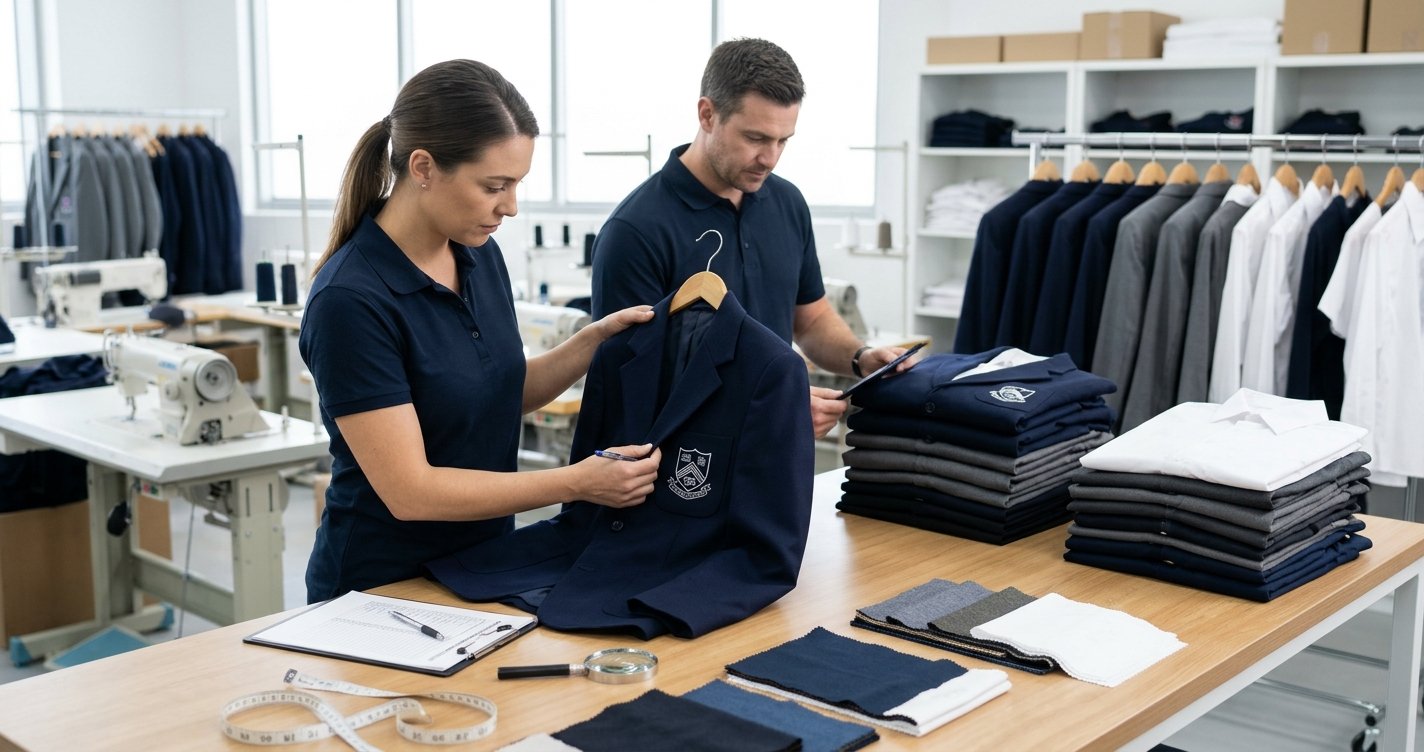
In school uniform manufacturing, the sample is not simply a prototype. It is a comprehensive technical validation tool. Distributors evaluate:
Fabric composition and weight.
Color consistency.
Stitch density and seam construction.
Logo placement and embroidery precision.
Size grading accuracy.
Labeling compliance for export markets.
Delivering samples within 5–7 days demonstrates responsiveness. However, speed alone does not build trust. Precision in execution is critical.
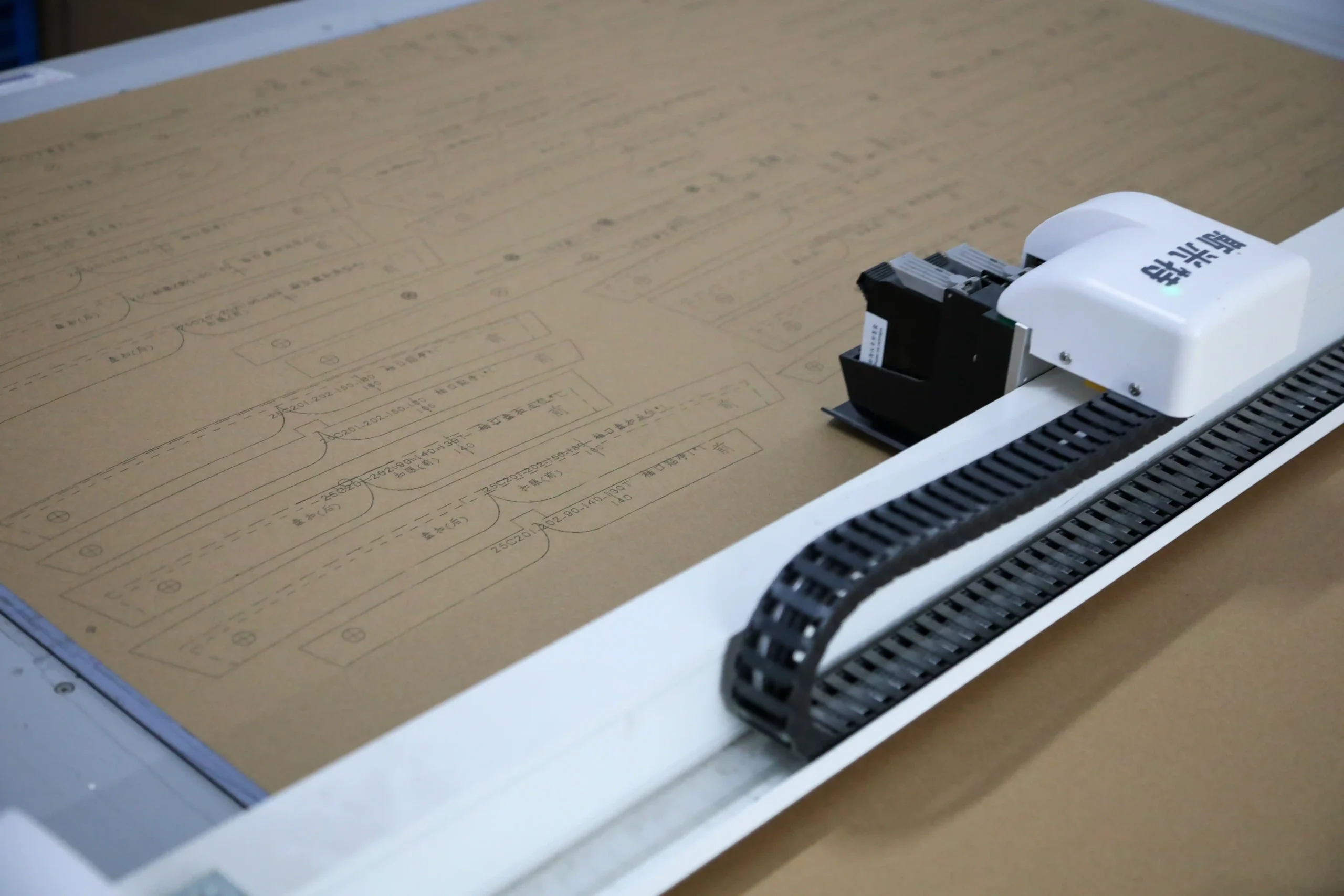
Using CAD pattern systems ensures that patterns are digitally standardized. This guarantees size consistency across boys’, girls’, and sportswear categories. Digital archiving allows approved patterns to be reproduced accurately for future bulk production.
During the sampling phase, structured communication prevents misunderstandings. Technical specifications are documented. Fabric swatches are confirmed. Branding details are aligned. Compliance standards for target markets are clarified.
ERP data management records all approved parameters. Once the sample is confirmed, its specifications become the foundation for bulk production.
This structured sampling process minimizes the risk of deviation during scale-up.
Confidence begins at this stage.
Stage Two: Bulk Order Execution – Scaling Without Losing Control
After sample approval, the first bulk order tests operational capability.
Large-scale school programs demand more than sewing capacity. They require organized production systems capable of handling volume while maintaining quality stability.
A 60,000㎡ modern manufacturing base equipped with automated Bullmer cutting lines and 23 lean sewing lines provides structured scalability.
Automated cutting systems ensure precision in fabric usage and consistent sizing. Fabric waste is reduced, and dimensional accuracy is maintained across large volumes.
TPET flow lines optimize production sequencing. Cutting, sewing, inspection, and packaging operate within a coordinated system that reduces bottlenecks.
Lean sewing lines introduce quality checkpoints at defined intervals. Rather than inspecting only at the end of production, monitoring occurs throughout the process.
With annual capacity exceeding 14 million pieces, production planning becomes data-driven rather than reactive.
Bulk school uniform production requires:
Pre-allocated production lines.
Dedicated teams for specific uniform categories.
Scheduled capacity based on academic calendars.
Real-time ERP tracking for transparency.
Predictable execution transforms a first bulk order into a foundation for repeat cooperation.
Stage Three: Inventory Strategy – Supporting Replenishment Cycles
In school uniform programs, the second order often arrives not as a new design request but as a replenishment.
New enrollments and mid-year demand spikes require a rapid response. Without inventory depth, distributors face delays that disrupt supply chains.
Maintaining 8.5 million units of ready inventory—including fabrics, trims, and finished garments—enables flexible replenishment solutions.
Ready-stock options with flexible MOQ support smaller volume restocking. Simultaneously, OEM/ODM bulk production remains available for large annual programs.
A stable outbound capacity of 150,000 pieces per day ensures reliable multi-region distribution.
Replenishment capability is often the turning point in supplier evaluation. When distributors experience smooth restocking during peak seasons, they gain confidence in long-term planning.
Inventory strategy supports repeat orders by reducing uncertainty.
Stage Four: Quality Assurance – Consistency Over Time
Quality is not measured by isolated inspection. It is measured by sustained performance across batches.
International certifications such as BSCI, SEDEX, BV, and RDS reflect compliance with ethical, environmental, and operational standards. However, certification is only part of the equation.
A structured internal quality system includes:
Raw material verification before production.
In-line inspection during sewing operations.
Final random inspection before shipment.
Consistency in fabric color and construction ensures that garments ordered this year match those ordered next year.
Uniform programs depend on visual continuity. A change in shade or fit disrupts brand consistency for schools.
Maintaining this continuity is what secures repeat contracts.
Stage Five: Risk Management – Protecting Academic Timelines
School calendars are fixed. Delays are not negotiable.
Structured manufacturing systems reduce risk through redundancy and planning.
Multiple sewing lines allow workload redistribution when necessary. Automated equipment reduces variability. ERP monitoring provides real-time updates on order progress.
Material reserves prevent upstream supply disruptions from affecting production schedules.
Risk management builds operational confidence. When distributors trust delivery timelines, they are more likely to commit to annual frameworks.
Stage Six: Expanding Cooperation – From Core Items to Full Solutions
As partnerships mature, product scope often expands.
Initial orders may include shirts or trousers. Over time, distributors may request:
Girls’ coordinated sets.
Seasonal sportswear collections.
Outerwear items.
Accessories and branded elements.
Multiple category-optimized production lines enable expansion without compromising delivery schedules.
Full-set uniform solutions simplify procurement. Distributors reduce supplier complexity and strengthen operational efficiency.
Expanded cooperation strengthens repeat business.
Stage Seven: Data-Driven Annual Planning – From Orders to Programs
Repeat orders eventually evolve into structured annual programs.
ERP systems support:
Forecast-based production scheduling.
Inventory tracking.
Volume trend analysis.
Multi-region shipping coordination.
Serving over 4,000 schools worldwide requires synchronization between manufacturing and distributor growth plans.
Annual discussions transition from price negotiation to strategic planning.
Manufacturing becomes embedded within the distributor’s operational framework.
The Economic Logic of Repeat Orders
Repeat orders create advantages for both parties.
For distributors:
Stable pricing frameworks.
Predictable delivery.
Reduced sourcing risk.
Simplified operational management.
For manufacturers:
Optimized capacity utilization.
Reduced production fluctuation.
Long-term financial stability.
Stronger market positioning.
The economic efficiency of repeat cooperation reinforces itself.
Why Structure Determines Sustainability
From initial sampling to annual replenishment, each stage reinforces the next.
Fast and accurate samples establish trust.
Structured production ensures reliable scale.
Inventory depth supports replenishment.
Quality control safeguards consistency.
Risk management protects timelines.
Data-driven planning aligns long-term growth.
Manufacturing excellence is not defined by machinery alone. It is defined by how systems interact to create predictability.
Predictability creates trust.
Trust creates repeat orders.
Repeat orders create sustainable partnerships.
Manufacturing Excellence as a Long-Term Commitment
The journey from sample to repeat orders reflects operational maturity.
A 60,000㎡ production base provides scale.
Automated cutting and lean sewing lines provide precision.
ERP management provides transparency.
Certifications provide compliance credibility.
Inventory and outbound capacity provide supply chain stability.
Together, these elements form a structured ecosystem capable of supporting long-term K–12 uniform programs.
In school uniform manufacturing, true excellence is not measured by how quickly one order is delivered. It is measured by how consistently many orders are fulfilled over time.
Repeat orders are not a coincidence.
They are the result of structured manufacturing built for continuity.