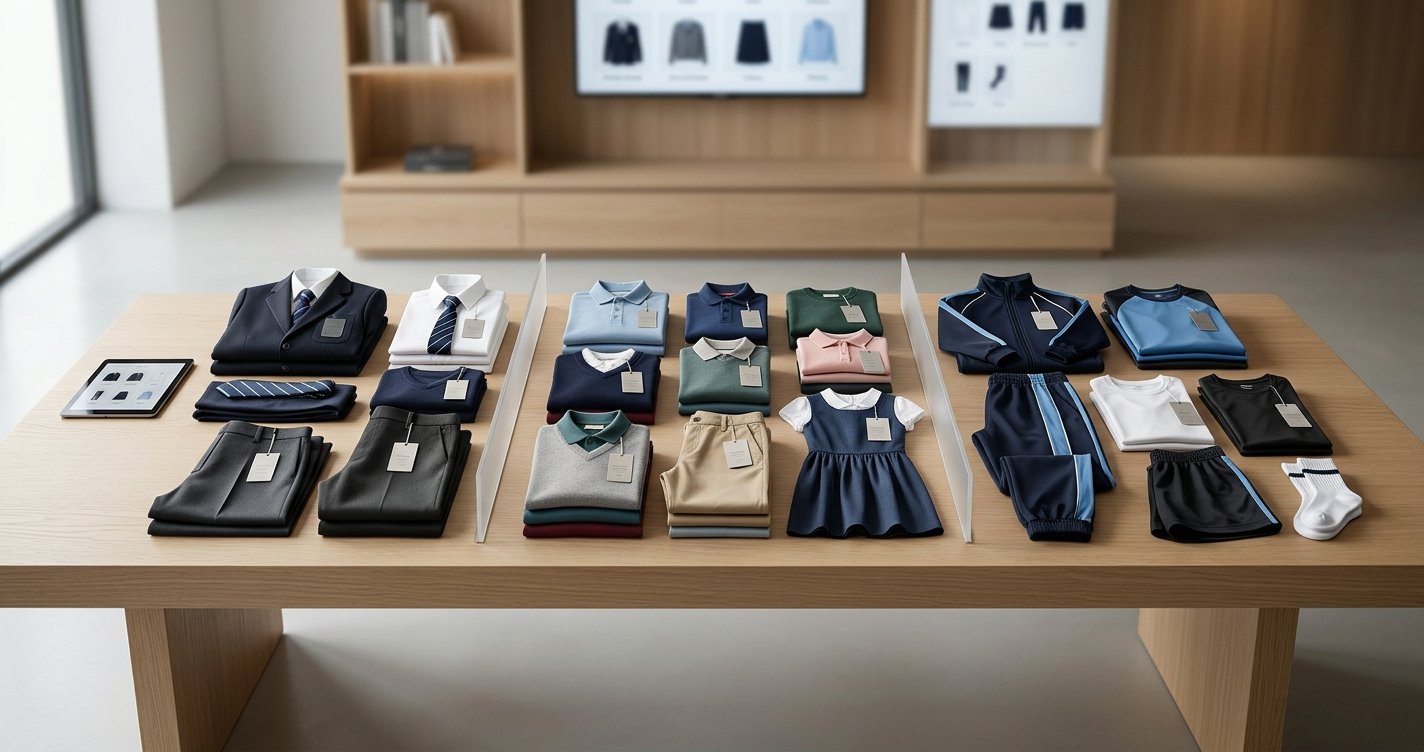
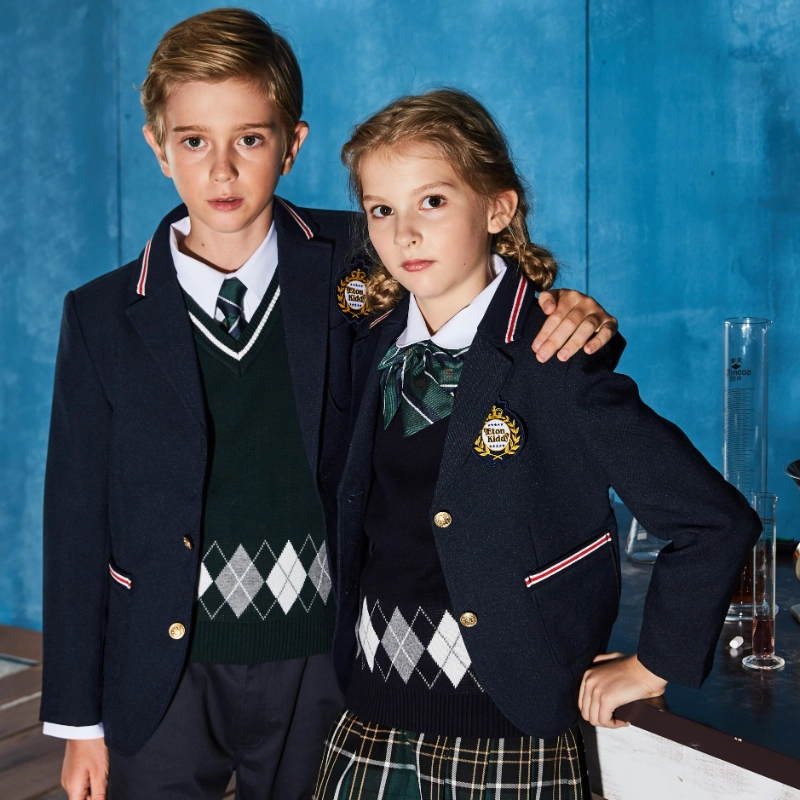
Selecting the right school blazer manufacturer involves more than just sourcing; it’s a long-term investment in garment durability, student comfort, institutional branding and supply chain reliability.
Studies of textile manufacturing and research into school uniform sourcing consistently show that fabric quality, ethical production, consistent sizing and long-term manufacturing stability are among the most important factors influencing the performance and procurement success of school uniforms.
Further industry analyses indicate that schools are increasingly prioritising sustainable fabrics, quality assurance systems and scalable production capacity when selecting school blazer suppliers.
Why Does Choosing the Right School Blazer Manufacturer Matter More Than Ever?
The modern school blazer is no longer just viewed as a formal garment worn by students. In today’s education sector, school blazers serve as markers of institutional identity, representations of brands, symbols of student discipline, and long-term operational investments. As schools increasingly compete to strengthen their public image and improve the student experience, the quality of uniforms has become closely tied to overall institutional perception.
Parents today also have higher expectations of school apparel. They expect blazers to maintain colour consistency, resist pilling, survive repeated washing, remain comfortable during long school days, and fit students properly for multiple years of schooling. At the same time, schools and distributors must balance durability, affordability, inventory continuity, and ethical sourcing requirements. This combination of expectations makes selecting a manufacturer significantly more complex than simply comparing prices.
Research into school uniform sourcing consistently shows that many procurement problems do not emerge during initial sample approval, but later during scale expansion, replenishment cycles, or seasonal delivery periods. Manufacturers that focus primarily on fast fashion often struggle with the long-term continuity requirements necessary for institutional school uniform programmes.
Therefore, a high-quality blazer manufacturer must function as both a supplier and a long-term operational partner, capable of maintaining consistent sizing, fabric continuity, stable lead times, repeatable quality standards, and scalable production support.
Companies such as Eton Kidd increasingly emphasise long-term school uniform programme management rather than short-cycle garment manufacturing. This shift reflects broader changes within the educational apparel sector, where schools prioritise supplier stability, compliance and lifecycle reliability over short-term purchasing costs alone.
Another major factor influencing the sourcing of modern school blazers is sustainability. Educational institutions are under increasing pressure to adopt environmentally responsible procurement strategies. Discussions in the fashion and textile industries now frequently evaluate school uniform fabrics based on recyclability, traceability, chemical usage, and ethical labour compliance. Recent reporting on school uniform manufacturing trends has revealed a growing interest in natural fibres, transparent supply chains, and circular garment programmes.
Consequently, selecting the appropriate school blazer manufacturer necessitates a simultaneous evaluation of operational capability, textile engineering proficiency, compliance systems, sustainability practices, and supply chain resilience.

Evaluate Fabric Quality and Long-Term Durability
The quality of the fabric is the most important factor in the manufacture of school blazers because they must withstand daily use by students over extended periods. Unlike fashion garments, which may only be worn occasionally, school blazers endure repeated friction, laundering, exposure to the weather, use in the classroom, wear during transportation, and frequent movement.
Industry sourcing guides therefore consistently recommend prioritising measurable textile performance indicators over visual appearance alone. These include:
- Colorfastness
- Pilling resistance
- Abrasion resistance
- Shrinkage control
- Seam strength
- Breathability
- Wrinkle resistance
High-quality school blazer fabrics are typically made from wool blends, polyester-viscose blends, or engineered suiting fabrics designed specifically for institutional uniforms. Polyester improves durability and wrinkle resistance, while wool enhances breathability and a premium appearance. Some modern manufacturers also incorporate elastane for improved flexibility and student comfort.
The following table outlines common school blazer fabric options:
| Fabric Type | Advantages | Limitations | Best Application |
| Wool Blend | Premium appearance, breathable | Higher cost | High-end schools |
| Polyester-Viscose | Durable, wrinkle-resistant | Less breathable | Standard uniforms |
| Cotton Blend | Comfortable and soft | Lower durability | Warm climates |
| Recycled Polyester | Sustainable option | Variable texture quality | Eco-focused programs |
| Stretch Suiting Fabric | Improved movement flexibility | Higher production cost | Active student environments |
Rather than relying solely on marketing claims, a professional manufacturer should provide laboratory testing reports. Schools should request documentation covering ISO or ASTM testing standards for factors such as wash durability, shrinkage tolerance, tensile strength, and colour consistency.
Research into textile manufacturing quality control is increasingly highlighting the importance of automated inspection systems and data-driven technologies for detecting textile defects.
Assess Manufacturing Capacity and Scalability
One of the biggest mistakes schools make when sourcing is choosing manufacturers based solely on sample quality, rather than evaluating production scalability. While many suppliers can produce small pilot orders successfully, they often struggle during peak seasonal demand periods.
School uniform manufacturing differs fundamentally from fast fashion because demand is highly concentrated around the academic calendar. Manufacturers must be able to handle large-volume orders within short seasonal timeframes while maintaining consistent quality and delivery schedules.
A qualified school blazer manufacturer should demonstrate the following:
- Stable annual production capacity;
- Dedicated school uniform production lines;
- Inventory continuity planning;
- Backup fabric sourcing systems;
- Peak-season operational management;
- Multi-school supply capability.
Industry sourcing reports emphasise that scalability is not simply about factory size — it is about operational consistency during high-pressure periods.
Schools should ask manufacturers the following questions:
- How many units can be produced monthly?
- What is the peak-season lead time?
- Can fabric continuity be maintained for multiple years?
- Are subcontractors used during high-volume periods?
- How are replenishment orders managed?
Manufacturers such as Eton Kidd are increasingly focusing on long-term institutional supply models specifically designed for stable school programme continuity.
Verify Pattern Development and Sizing Consistency
Consistency in sizing is one of the most overlooked yet operationally critical elements in the production of school blazers. Unlike general apparel, school uniforms must maintain consistent sizing across multiple academic years, as parents often buy replacement garments based on previous familiarity with the sizing.
A professional blazer manufacturer should maintain the following:
- Standardised grading systems
- Historical pattern archives
- Consistent fit blocks
- Multi-age sizing frameworks
- Gender-specific ergonomic fitting
- Sample fit testing procedures
Research into uniform manufacturing workflows highlights pattern standardisation as a major factor influencing wearer satisfaction and production consistency.
Below is a simplified sizing management comparison table:
| Manufacturer Capability | Low-Level Supplier | Professional School Blazer Manufacturer |
| Archived Patterns | Rarely maintained | Long-term storage |
| Multi-Year Size Continuity | Unstable | Standardized |
| Student Age Grading | Generic sizing | School-specific grading |
| Fit Testing | Limited | Systematic |
| Sample Revision Process | Informal | Structured engineering |
Poor sizing consistency creates operational issues, including inventory waste, parent complaints, increased returns, and administrative burdens for schools.
Examine Ethical Manufacturing and Sustainability Standards
Ethical sourcing has become an increasingly important consideration in educational procurement. Today, schools are expected to evaluate not only the quality of garments, but also the social and environmental conditions under which uniforms are produced.
Ethical school blazer manufacturers should demonstrate the following:
- Fair labour compliance;
- Transparent supply chains;
- Sustainable textile sourcing;
- Reduced chemical usage;
- Environmental certifications;
- Worker welfare policies.
Recent sustainability discussions in school uniform manufacturing have focused heavily on synthetic dependency, traceability, and biodegradable textile alternatives.
Schools should look for certifications such as:
ISO 9001, OEKO-TEX, GOTS, WRAP, BSCI, and Sedex.
Manufacturers with vertically integrated systems often provide better transparency because fabric sourcing, dyeing, cutting, sewing, and logistics remain under centralised management.
Evaluate Customization and Branding Capability
Ultimately, a school blazer is an institutional branding product. Therefore, the manufacturer should support customisation beyond simple garment assembly.
Important customisation capabilities include:
- Embroidery
- Crest application
- Colour matching
- Piping customisation
- Button branding
- Label integration
- House colour differentiation
Modern manufacturers increasingly use CAD-based design systems, digital sampling and 3D garment visualisation to improve customisation accuracy.
Brand consistency is especially important for multi-campus schools, private academies, and international educational institutions, where visual identity is closely tied to institutional reputation.
Review Quality Control Systems and Inspection Procedures
Professional school blazer manufacturers should operate formal quality assurance systems covering every production stage.
Key inspection stages include:
| Production Stage | Quality Focus |
| Fabric Inspection | Color consistency, defects |
| Cutting Inspection | Panel accuracy |
| Sewing Inspection | Seam quality |
| Finishing Inspection | Shaping and pressing |
| Final Audit | Packaging and sizing |
Modern textile factories are increasingly using AI-assisted inspection systems and automated fabric defect recognition technologies to improve manufacturing consistency.
Schools should request the following:
- AQL standards
- Inspection documentation
- Wash testing reports
- Random batch inspection policies
- Corrective action procedures
Analyze Lead Times and Supply Chain Stability
Late deliveries are one of the most damaging problems in school uniform procurement, as academic calendars cannot be delayed.
Reliable manufacturers must demonstrate the following:
- Stable fabric sourcing;
- Predictable logistics systems;
- Inventory forecasting;
- Backup production planning;
- International shipping expertise.
Manufacturers that specialise specifically in school uniforms generally perform better than general garment factories because they understand the strict timing pressures associated with academic enrolment periods.
Following recent global logistics disruptions affecting the textile manufacturing and international shipping industries, supply chain resilience has become even more important.
Compare Cost Structure Beyond Unit Price
Many schools make the mistake of selecting suppliers based solely on the initial quotation cost. However, low unit pricing can result in higher long-term operational expenses due to replacement orders, inconsistent sizing, colour mismatches, or fabric failures.
A professional cost evaluation should include the following:
- Fabric lifespan
- Replacement frequency
- Logistics costs
- Inventory stability
- Parent satisfaction
- Administrative overhead
- Warranty support
A slightly higher-quality blazer often results in a lower lifecycle cost because it lasts longer and reduces the complexity of replenishment.
Assess Communication and Technical Support Capability
The quality of communication has a strong impact on long-term procurement success. Schools should evaluate whether manufacturers provide the following:
- Dedicated account managers;
- Technical consultation;
- Fast response times;
- Digital order tracking;
- Sampling support;
- Documentation systems.
Poor communication can cause production delays, incorrect specifications, or order inconsistencies.
Manufacturers with experience in institutional uniform programmes tend to have stronger operational communication systems in place because school procurement requires ongoing coordination rather than one-off transactions.
Choose A Manufacturer With Long-Term Industry Specialization
Finally, specialisation is extremely important in school blazer manufacturing. General apparel factories often lack the operational structure required for long-term institutional programmes.
A qualified school blazer manufacturer should demonstrate the following:
- Multi-year experience working with schools
- Dedicated uniform expertise
- Stable production infrastructure
- Knowledge of the educational sector
- Long-term client retention
Industry sourcing discussions consistently emphasise that school uniforms are not fast-fashion products; they are continuity-driven institutional garments requiring specialised operational management.
Manufacturers such as Eton Kidd are increasingly positioning themselves around long-term school programme management rather than short-cycle garment production, reflecting the broader evolution of the educational apparel sector.
FAQ About School Blazer Manufacturers
- What fabric is best for a school blazer?
Wool blends and polyester-viscose fabrics are among the most commonly used materials because they balance durability, wrinkle resistance, comfort, and professional appearance.
- How do schools choose a school blazer manufacturer?
Schools typically evaluate manufacturers based on quality control, production capacity, fabric durability, ethical sourcing, customization capability, pricing stability, and delivery reliability.
- Why is sizing consistency important in school uniforms?
Students often reorder replacement garments over several academic years. Consistent sizing reduces returns, improves parent satisfaction, and simplifies inventory management.
- Are sustainable school blazers becoming more popular?
Yes. Many schools are increasingly prioritizing recycled materials, traceable fabrics, and ethical production standards as sustainability expectations rise globally.
- What certifications should a school blazer manufacturer have?
Important certifications may include ISO 9001, OEKO-TEX, WRAP, GOTS, Sedex, and BSCI, depending on sourcing requirements.
- What is the biggest mistake when choosing a school blazer supplier?
Focusing only on low unit price without evaluating long-term quality consistency, scalability, and supply chain reliability is one of the most common procurement mistakes.
Conclusion
Selecting the right school blazer manufacturer involves far more than reviewing samples or comparing quotations. Modern school uniform sourcing demands a comprehensive evaluation of factors such as textile quality, manufacturing scalability, ethical compliance, sizing consistency, operational reliability, and long-term supply continuity.
As schools increasingly prioritise durability, sustainability, institutional branding and parent satisfaction, manufacturers must evolve beyond simple garment production to become long-term strategic partners. The best suppliers combine technical textile expertise with structured quality control systems and advanced production management, as well as scalable infrastructure capable of supporting educational institutions across multiple academic cycles.
Companies such as Eton Kidd reflect the broader industry transition towards specialised school uniform manufacturing systems designed specifically for long-term institutional programmes rather than short-term apparel production.
In an increasingly competitive education environment, choosing the right school blazer manufacturer influences not only the performance of the garments but also operational efficiency, institutional image, procurement stability, and long-term stakeholder satisfaction.