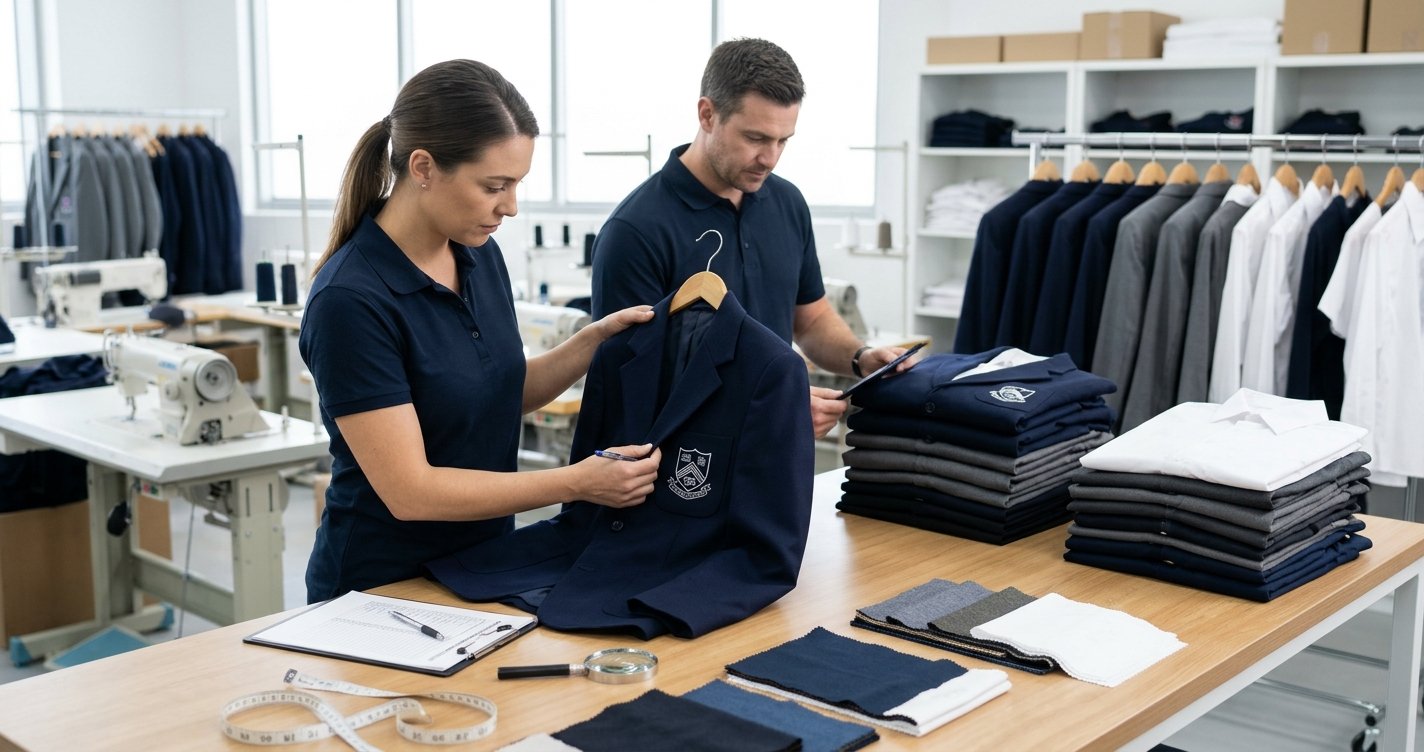
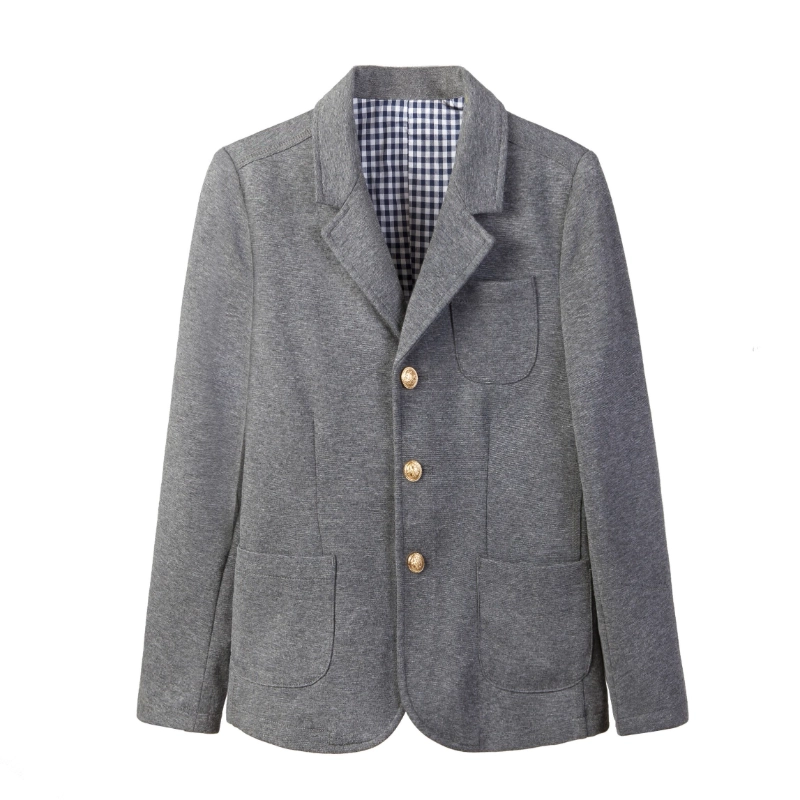
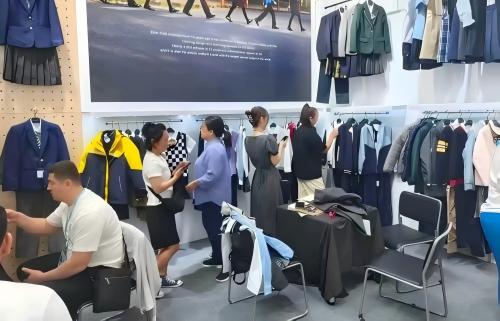
Choosing a school uniform supplier is not a short-term purchasing decision. It is a strategic commitment that can influence daily student life, school operations, and brand perception for years. Unlike seasonal apparel or promotional clothing, school uniforms must perform consistently across academic cycles, enrollment changes, and evolving regulatory requirements.
For schools, school groups, and uniform distributors, the challenge is rarely about finding a manufacturer. The real challenge is qualifying the right manufacturer—one capable of supporting long-term K–12 uniform programs without disruption.
Why a Checklist Approach Matters in School Uniform Sourcing
School uniforms occupy a unique position in the apparel supply chain. They are not trend-driven. They are not impulse purchases. And they are not easily replaced once a program is established.
A uniform supplier becomes embedded in a school’s daily operations. When issues arise—late deliveries, inconsistent sizing, quality complaints, or compliance failures—the impact is immediate and visible. Students are affected. Parents notice. Administrative teams are forced into reactive problem-solving.
A structured qualification checklist helps schools and distributors shift from reactive sourcing to proactive risk management. Instead of asking, “Who can make uniforms?”, the better question becomes, “Who can reliably support our uniform program year after year?”
Checklist Item #1: Is the Manufacturer Truly Focused on School Uniforms?
Not all garment factories are created equal. Many apparel manufacturers operate across multiple product categories—fashion apparel, corporate wear, promotional clothing, private-label retail, and more. While versatility can be useful, it often comes at the expense of specialization.
School uniforms demand a fundamentally different manufacturing mindset.
Uniforms must maintain consistent sizing across multiple years. Fabrics must withstand frequent washing. Designs must balance durability, comfort, and modesty while remaining consistent across grade levels. Most importantly, uniforms must remain available long after initial launch.
Manufacturers focused on fast fashion or short-run OEM production often struggle with these requirements. Their systems are optimized for rapid turnover, not continuity. Patterns change frequently. Fabric sources shift. Production priorities follow seasonal demand rather than academic cycles.
A qualified school uniform manufacturer demonstrates:
Long-term commitment to uniform programs rather than seasonal collections
Sizing systems designed specifically for K–12 students
Design continuity across multiple academic years
Institutional knowledge of school dress codes and expectations
Specialization matters because school uniforms are not a product line—they are a responsibility.
Checklist Item #2: Can the Manufacturer Support Program Scale Without Disruption?
Scalability is one of the most underestimated risks in school uniform sourcing.
Many manufacturers perform well with initial orders, pilot programs, or single-school projects. Problems often emerge when programs expand—new campuses are added, enrollment increases, or regional distributors consolidate demand.
A qualified manufacturer must be able to scale without compromising quality or delivery timelines.
Key considerations include:
Annual production capacity relative to projected growth
Daily outbound volume during peak academic seasons
Ability to maintain consistency across large batch orders
Experience supporting multi-school or multi-region programs
Scalability is not defined by maximum output alone. It is defined by how a manufacturer performs during pressure periods—particularly before the start of the academic year, when demand spikes and timelines are fixed.
Manufacturers with proven large-scale infrastructure can absorb growth without operational strain. Those without it may resort to subcontracting, rushed production, or quality shortcuts, all of which introduce risk.
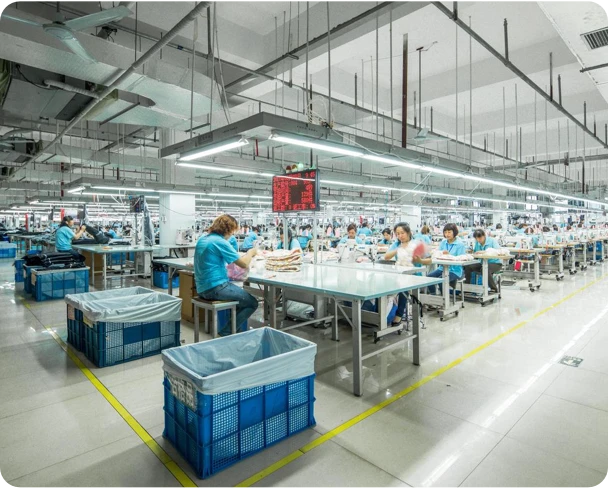
Checklist Item #3: Does the Manufacturer Have Stable, Long-Term Manufacturing Infrastructure?
School uniform programs are long-term by nature. This makes manufacturing stability a critical qualification factor.
Infrastructure stability goes beyond factory size. It includes investment philosophy, equipment lifecycle management, workforce retention, and operational planning.
A stable manufacturing partner typically demonstrates:
Continuous investment in production facilities and technology
Established quality control systems embedded in daily operations
Experienced management teams with long-term planning horizons
Financial backing that supports growth rather than short-term output
Manufacturers operating on thin margins or short investment cycles may struggle to maintain consistency over time. In contrast, organizations with strong institutional support and long-term capital planning are better positioned to sustain uniform programs across multiple academic generations.
For schools and distributors, infrastructure stability translates directly into supply confidence.
Checklist Item #4: Is the Supply Chain Designed for Reliability, Not Speed Alone?
Speed is often highlighted as a selling point in apparel manufacturing. In school uniform programs, reliability is far more valuable.
Uniform supply chains must prioritize consistency, material continuity, and predictable replenishment. A late shipment or fabric substitution may be acceptable in fashion retail, but it can undermine an entire school program.
A reliable school uniform supply chain typically features:
Stable fabric sourcing with long-term supplier relationships
Standardized trims and accessories to ensure design continuity
Production planning aligned with academic calendars
Inventory strategies that support replenishment and size adjustments
Manufacturers that optimize solely for speed may sacrifice these elements. In contrast, reliability-focused supply chains are designed to support repeat orders, uniform replacements, and program longevity.
Checklist Item #5: Does the Manufacturer Understand Academic Calendars and Uniform Cycles?
Academic calendars are the backbone of school uniform planning.
Uniform demand does not follow standard retail seasons. It peaks before school starts, stabilizes during the academic year, and requires ongoing replenishment as students grow or enroll mid-year.
Manufacturers unfamiliar with these cycles often misjudge production timing, inventory requirements, or replenishment needs.
A qualified manufacturer understands:
Pre-term ordering windows and delivery deadlines
Mid-year enrollment changes and size replacement needs
Multi-year design continuity requirements
The operational impact of missed academic milestones
This understanding allows for proactive planning rather than reactive fulfillment. It also reduces stress for schools and distributors during the most time-sensitive periods of the year.
Checklist Item #6: Can the Manufacturer Offer Flexible Cooperation Models?
School uniform programs vary widely in structure. Some schools manage procurement directly. Others work through regional distributors. International programs often involve layered partnerships.
A one-size-fits-all manufacturing model rarely works.
Qualified manufacturers offer flexible cooperation frameworks that adapt to different operational realities. These may include:
Direct supply models for individual schools or school groups
Distributor-supported models for regional or national programs
Scalable service structures that evolve as programs grow
Support for both standardized and customized uniform sets
Flexibility does not mean inconsistency. It means structured adaptability—systems that adjust without compromising quality or reliability.
Checklist Item #7: Is the Manufacturer Compliance-Ready for International Programs?
As school networks expand globally, compliance becomes a foundational requirement rather than a secondary consideration.
International uniform programs must navigate varying regulatory environments, safety standards, and quality expectations. Manufacturers without international experience may underestimate these complexities.
Compliance-ready manufacturers demonstrate:
Familiarity with international textile and safety standards
Experience supporting cross-border uniform programs
Documented quality and compliance processes
Ability to deliver full uniform solutions that meet diverse requirements
Compliance failures are costly—not only financially, but reputationally. Schools and distributors benefit from partners who treat compliance as an integral part of their manufacturing culture.
Choosing a School Uniform Manufacturer Is Choosing a Long-Term Partner
School uniform sourcing is not a transactional decision. It is a long-term partnership that influences operational efficiency, brand consistency, and student experience.
A checklist-based qualification approach helps schools and distributors move beyond surface-level comparisons and focus on what truly matters: stability, scalability, specialization, and trust.
The most reliable school uniform manufacturers are not those who promise the lowest price or the fastest turnaround. They are those who understand the responsibility that comes with supporting educational institutions year after year—and who have built their systems to honor that responsibility.